Sweet, delightful botanicals
Friends, I want to start this with a heartfelt thank you for all of your replies, messages, texts, and emails following my last transmission. I can’t tell you how much it has meant to receive so much love and support during such a heart-wrenching experience. Thank you for this special cross-pollination of shared experiences and care for each other. I am truly taken aback and so grateful for each and every one of you.
While I’m still recovering in all senses and unable to be outside getting active and finding joy in creation again, I thought I would take this time to revisit old articles and magazine contributions from years past. So today, I give to you what was one of my first contributions to Taproot Magazine (RIP), which is, unsurprisingly, all about… flowers.
I hope this inspires you to sprinkle some extra flower fairy dust (aka flower seeds) in your growing spaces this spring, and gives you fresh ideas to make the most of the ones you’re harvesting now and through summer’s end.
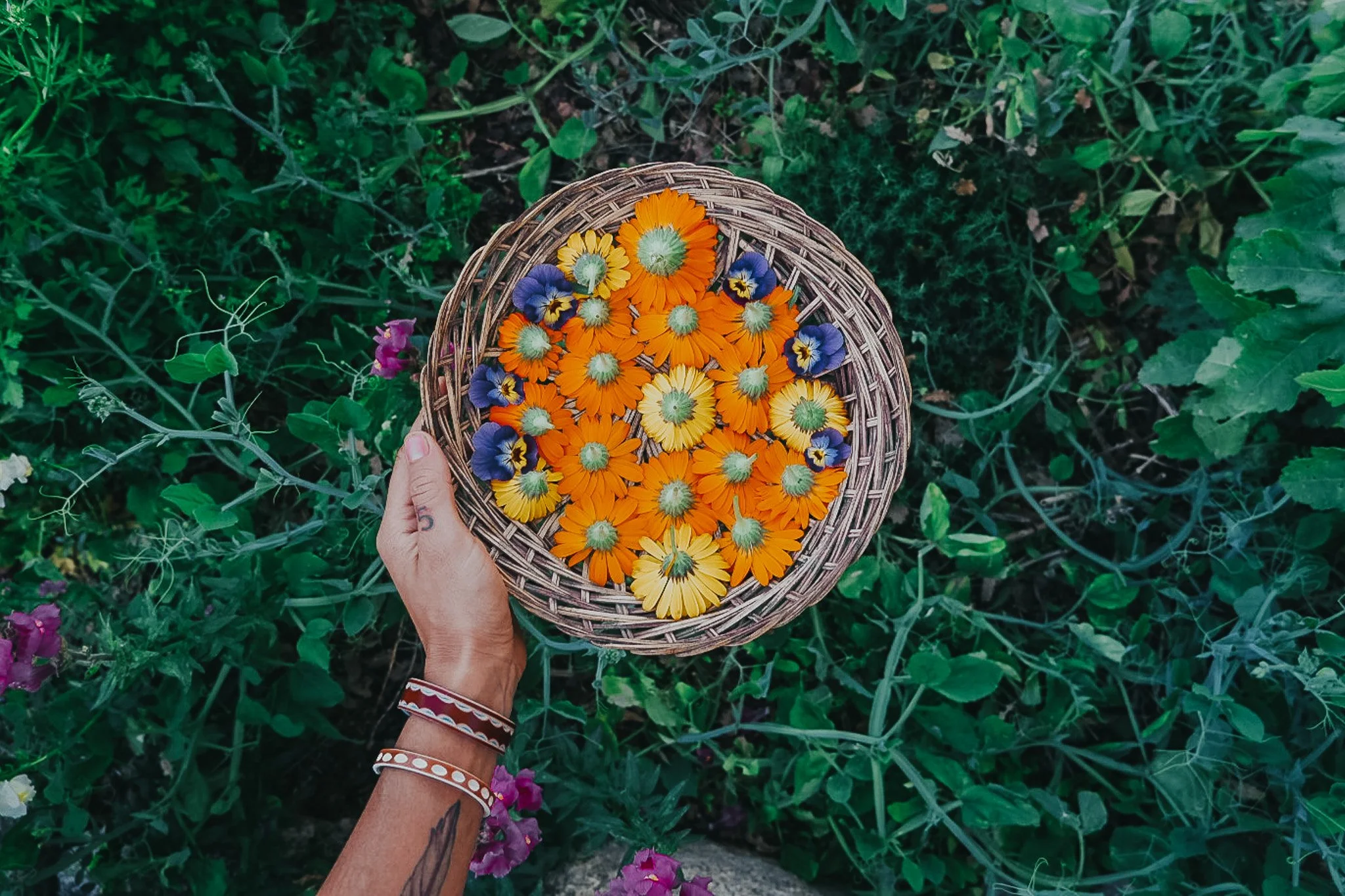
In late winter and early spring, I do my best to sow a rainbow of flowering herbs, thinking of the seasons ahead. Then once the warmer days come, our garden delights us and pollinators alike with its festival of colors. Some years might be luckier and more colorful than others, but underlying every blooming season is a joy unlike any other—the joy of colors, of flowers, of being alive.
Edible flowers are my favorite of the bunch. Eating flowers is the epitome of a happiness and beauty that is hard for me to put into words. Put simply, it’s a little bit like magic.
Always leaving behind enough for the insect kin, we collect blossoms in the early mornings to be incorporated into the meals of the day and also to be dried for the months to come. Dried flowers and herbs are easy to work with, and they lend themselves to preparations that can spark enchantment during the long, cold months ahead. Opening a jar of something made with warmer days’ botanicals during those dark winter evenings is like being greeted by an old friend. Oh, there you are. I remember you, under that warm sun, as bees buzzed about.
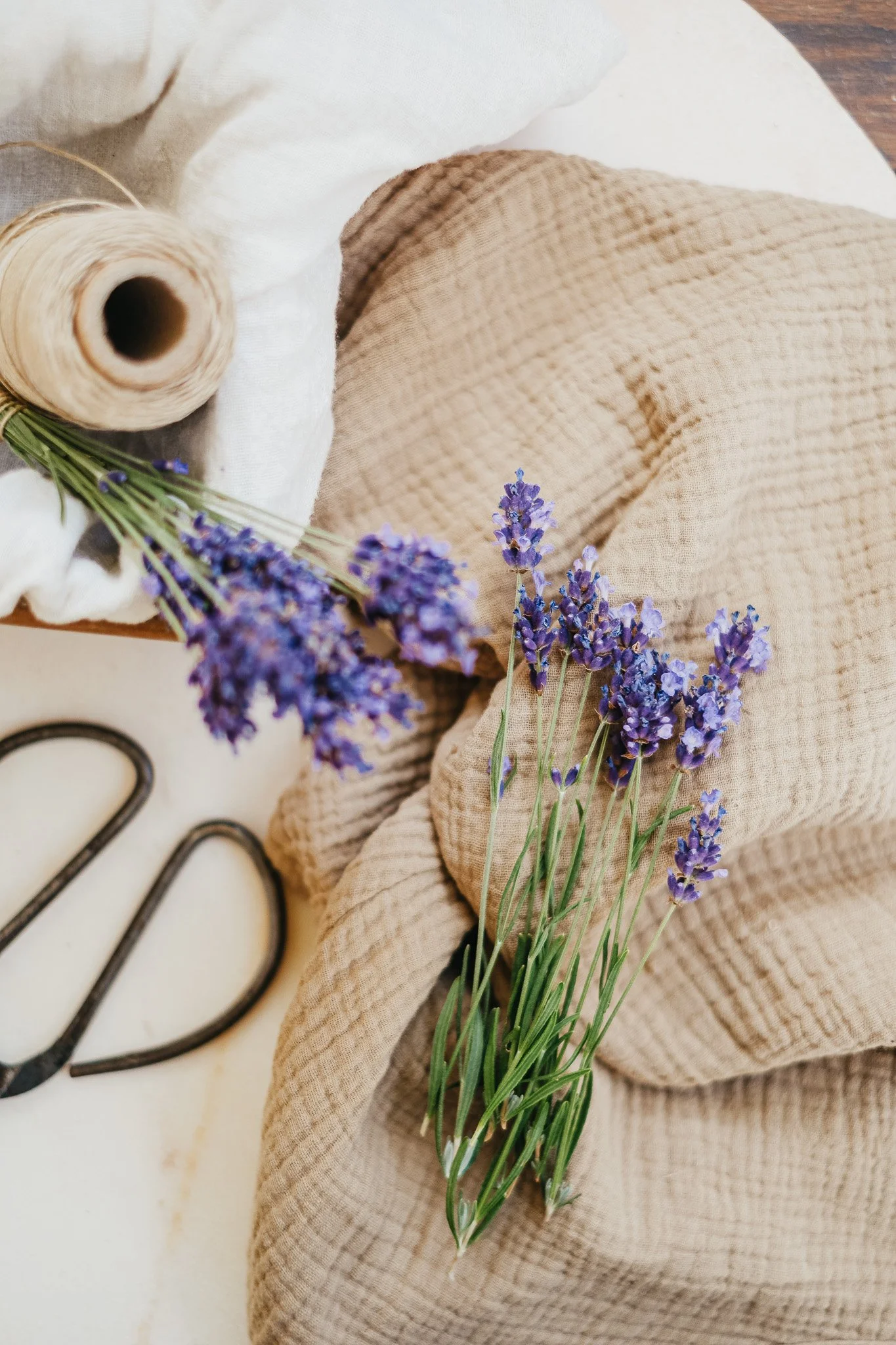
So here’s to that. Here’s to botanical joy, colorful happiness, and summer’s dripping delectation. And, since flowers live in much of our collective imagination alongside honeyed memories, these recipes shine a sweet light upon these garden friends. Exquisite and exuberant, may they shine a colorful, botanical light onto your table for the months to come.
A note of caution: Always make sure you’ve properly identified your plants before using them. If you don’t grow edible flowers yourself, source them from a reputable source or a friend’s garden (and offer them some of your botanical sweeteners in return!), first ensuring they haven’t been sprayed with chemicals.

Botanical Sugars
Botanical sugars are a wonderful way of taking your baked goods and sweet recipes to the next level. For the most aromatic results, simply choose fragrant herbs. For this recipe it’s best to use dried herbs, or at least fresh herbs that have been wilted overnight; fresh herbs, which are high in water content, may spoil the sugar or reduce their shelf life. You can use any type of sugar you want, but white sugar really makes the botanical colors shine!
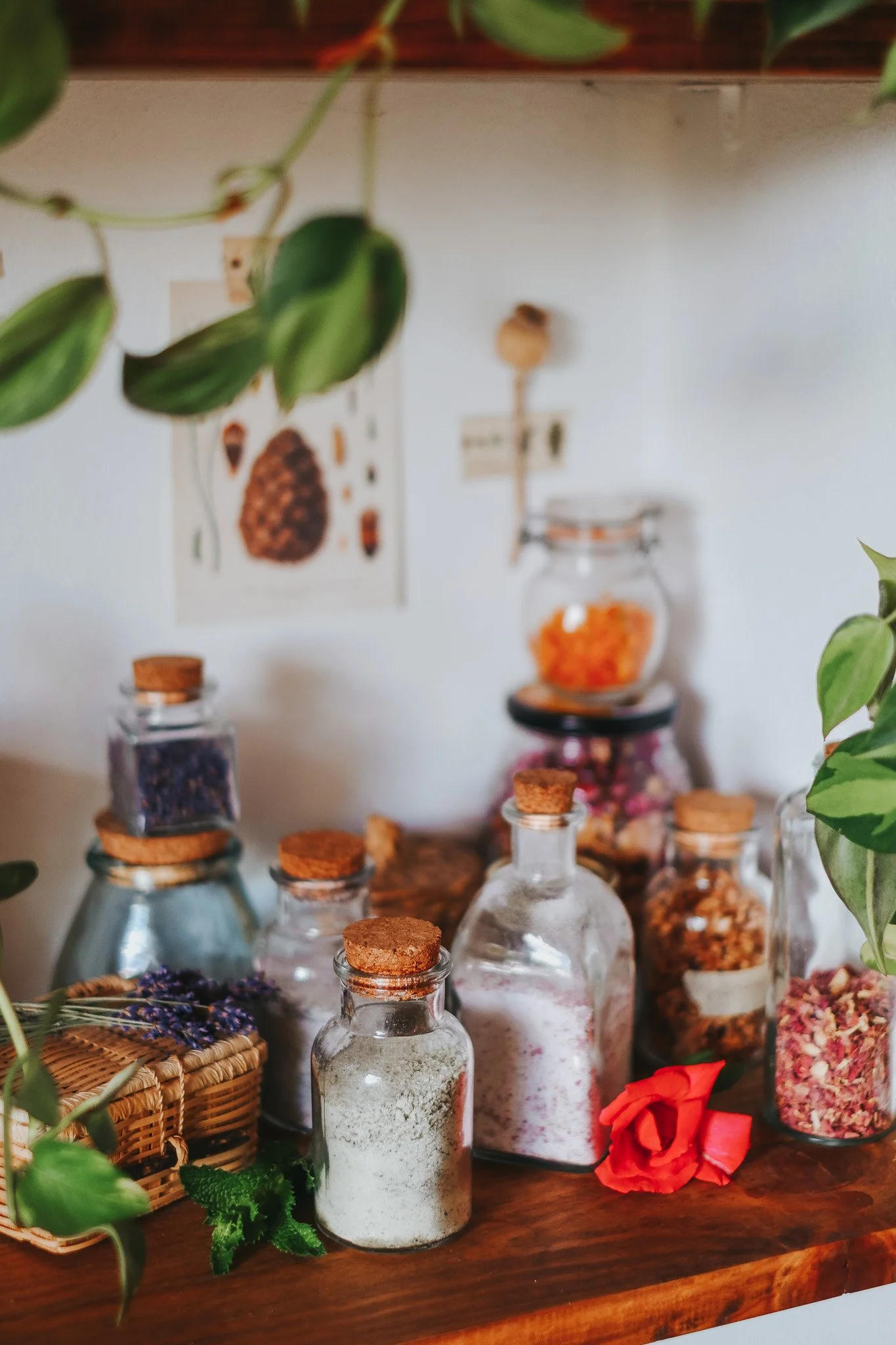
Makes about 1 cup.
ingredients2 tablespoons dried leaves, flowers, or buds, or ¼ cup lightly packed fresh herbs, wilted overnight
1 cup white sugar or sugar of choice
directionsRoughly chop your herbs.
Combine herbs and sugar in a high-speed blender and pulse until the herbs are ground and well distributed.
Spread out your botanical sugar in a thin layer on a baking tray and leave undisturbed in a dry, warm place, until it feels well dry to the touch, up to 2 days. This will help any excess moisture to evaporate. Occasionally stir the botanical sugar around with a fork to break up any clumps.
Once dry, pour the herbal sugar through a mesh strainer into a jar, cover with a tight-fitting lid, and label.
Herbal sugar will keep for about 6 months in a cool, dark place.
Herbs for delightful botanical sugars:
Lavender (Lavandula spp.) buds
Lilac (Syringa vulgaris) flowers, green stems removed
Mint (Mentha spp.) leaves
Rose (Rosa spp.) petals

Botanical Honey
Probably my favorite flower recipe, botanical honey brings a whimsical touch to foods. Unlike botanical sugars, which are wonderful to bake with, these are usually added as a finishing touch or spread over foods. I love botanical honey stirred into hot drinks, spread over toast, or drizzled over pancakes, but really, the choices are endless. It’s best to use dried herbs here, although you could work with them fresh too—just keep in mind that fresh herbs will reduce your honey’s shelf life by half.
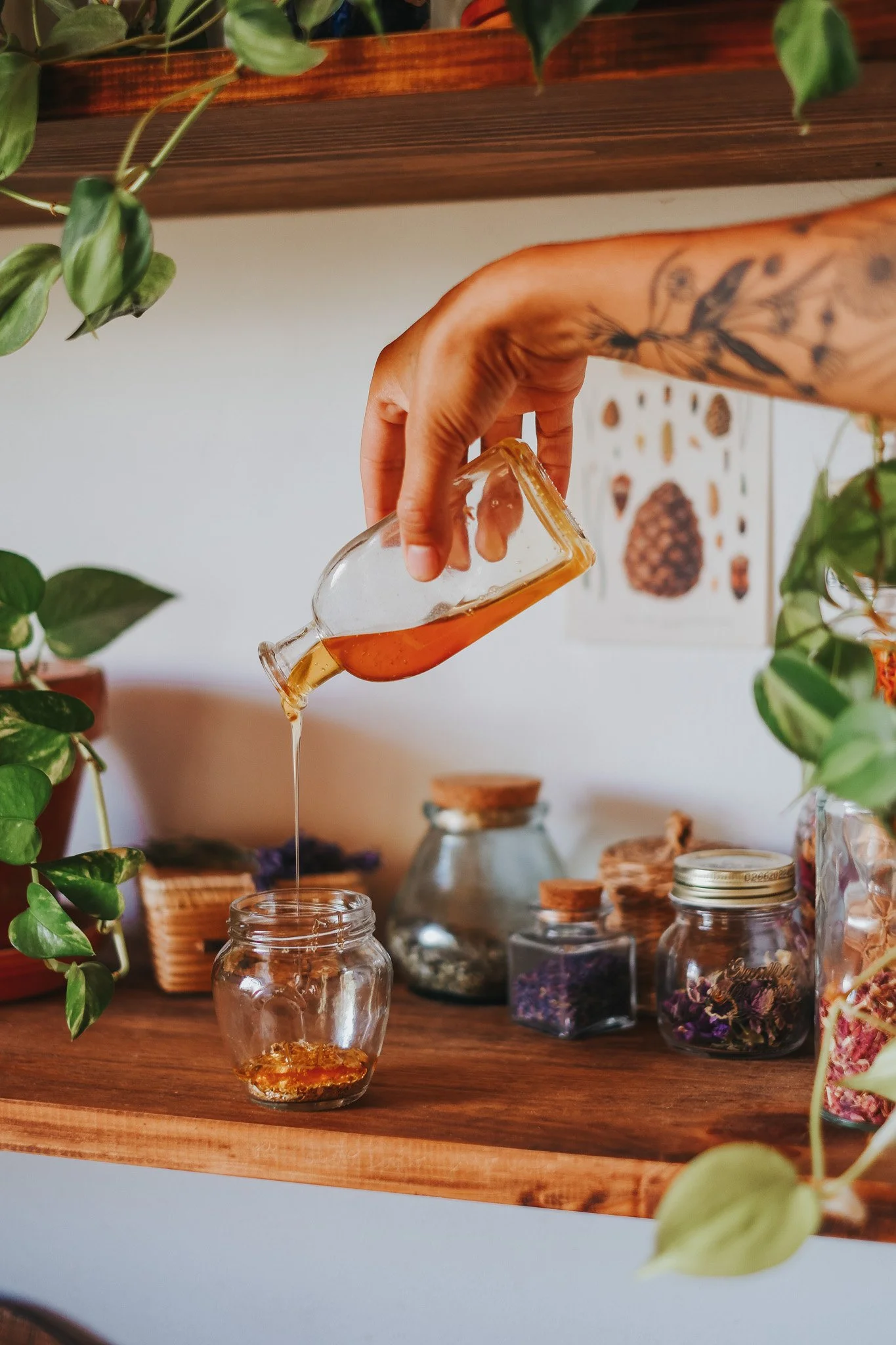
Makes about 1 cup.
ingredients¼ cup lightly packed dried leaves, flowers, or buds
1 cup honey
directionsPut your herbs into a jar and pour half the honey on top. Stir well with a spoon to release any air bubbles, then add the remaining honey. Cap the jar tightly and place in a dark shelf to infuse for 2 weeks. Twice a day, flip your jar upside down to ensure all plant material comes into contact with the honey.
Once well-infused and fragrant, you may want to strain your honey. (This is completely optional! You may find you don’t mind some flowers in your food.) To strain, gently heat your jar of botanical honey in a double boiler until it is runny, then strain it through a fine-mesh strainer into a new jar. Compost the herbs. Cover with a tight-fitting lid and label.
Botanical honey will keep for about 6 months in a cool, dark place.
If you used fresh herbs, it will keep for up to 3 months, and you can store it in the fridge to extend its shelf life.
Favorite herbs for botanical honeys:
Anise hyssop (Agastache foeniculum) flowers
German chamomile (Matricaria chamomilla) flowers
Jasmine (Jasminum officinale) flowers
Lavender (Lavandula spp.) buds
Lilac (Syringa vulgaris) flowers, green stems removed

Flower Power Sprinkle
All is well and fragrant, but what about when you just want to add a pop of colorful flower joy to your food? Well, then you turn to flower sprinkles. Sprinkles are all about color, so the flowers don’t need to be very aromatic, but you could certainly choose sweet-scented flowers for yours. These can be sprinkled over cakes and pancakes, cooked grains and porridges, or they can even garnish the rim of a glass for a special drink. So let your eyes guide you as you roam your garden, not your nose this time. As always, be sure to use only edible flowers.

Yield varies.
ingredientsDried edible flowers (see note)
Note: I like to add about five colors to my sprinkle, so I focus on collecting blues, oranges, pinks, purples, and whites.
directionsBreak down any flower parts that are larger than the others until everything is about the same size, then simply mix well. Transfer into a jar, cover with a tight-fitting lid, and label.
Flower sprinkle will keep for up to a year in a dark place.
Flower options by color:
Blue
Borage (Borago officinalis) flowers
Cornflower (Centaurea cyanus) petals
Orange
Calendula (Calendula officinalis) petals
Nasturtium (Tropaeolum majus) petals
Sunflower (Helianthus annuus) petals
Pink
Rose (Rosa spp.) petals
Hollyhock (Alcea rosea) petals
Purple
English lavender (Lavandula angustifolia) buds
Violets (Viola spp.)
White
Heartsease (Viola tricolor), which could bring different hues to your sprinkle depending on which ones you pick!

May you keep on finding joy in the small things. I know I am 🌸
Have a wonderful weekend, everyone!