A solstice herbal craft
Happy summer solstice, everyone!
And a blessed winter solstice for my southern hemisphere folkx!
However you are celebrating the longest day of the year and the official arrival of summer, I hope you are welcoming with open arms the days of sun, play, and joy. For us, the shift that comes with the solstice brings small village parties, long evenings outdoors with friends, food, and music as the temperatures drop after hot days, and dips in various bodies of water.
The days are so long now, a stark contrast to winter’s early sunsets, so I tend to wrap my workdays earlier to fully take in summer’s joys. Taking the sheep out to the field for longer grazing, baking with our daughter, frog-spotting in our water mine by the vegetable garden, and the occasional swim among said frogs (followed by a good measure of shrieking and oh, it’s so cold huffs).
Many of my favorite herbal allies are also in full bloom, celebrating the sun’s vibrancy — yarrow, calendula, rose… And St. John’s wort.
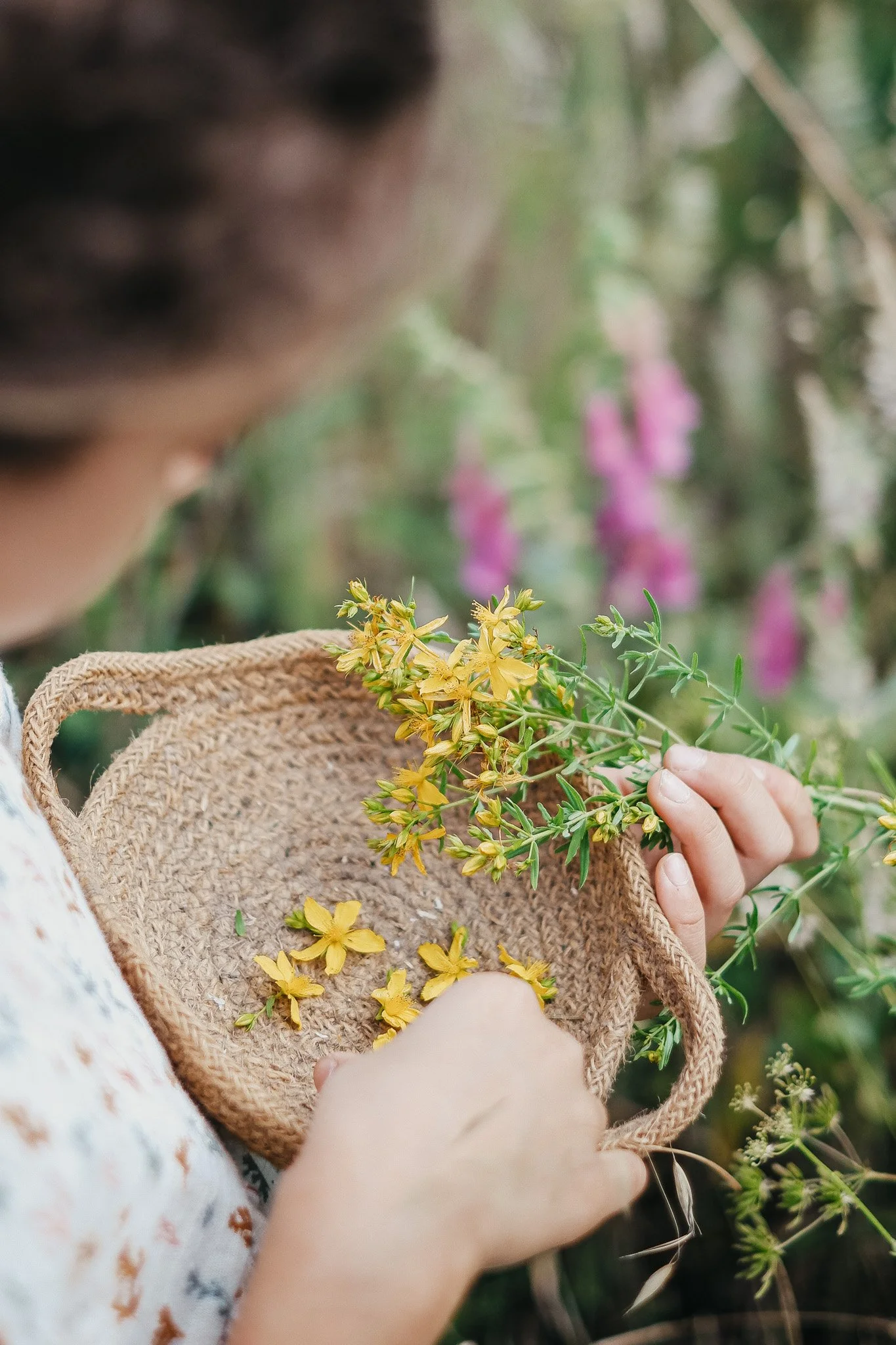
St. John’s wort (Hypericum perforatum), hipericão in Portuguese, holds a very dear place in my heart. This herb was my gateway into herbalism! And, once you work with it, it’s easy to understand why it has this special allure.
St. John’s wort is a perennial herb easily spotted this time of year in fields, low-density woods, dry meadows, and with a propensity to grow alongside paths and roads (though you want to avoid harvesting plants that grow by roadsides). It starts flowering in early June, and its flowers give it off immediately, as it creates bushy masses of bright yellow with red undertones, easy to spot amongst the dry grasses that are so common this season. It opens its flowers for a single day; however, the same plant flowers over a long period.
St. John’s wort flowers are bright yellow, with a special characteristic that makes them easy to identify: the petals are sprinkled with tiny black dots that look like the smallest of holes. This gives it its species name, perforatum.
Now here’s the magic: if you pick a flower and crush it between your fingers, it will release a red pigment. This is called hypericin, and while it is present in the fresh flower, it is not preserved in the dried one. So St. John’s wort is a bit of an exception to the general rule that herbs are best used dry. In this case, and of course depending on the constituent you are aiming to extract, St. John’s Wort is best used fresh.

Now, here’s the other part of this herb’s magical alchemy that made me fall in love with, and with herbalism. When the fresh yellow flowers are infused in oil… The oil becomes red! The first time I prepared a batch of St. John’s wort-infused oil, I felt like a little witch making a herbal concoction. It was just so incredibly cool. We all start somewhere, right?

Alright, just why do I love St. John’s wort so much (and you should, too)? Because it has an incredible affinity with the skin.
You see, this herb lists anti-inflammatory, antimicrobial, antiseptic, astringent, and vulnerary actions among its properties. And although you can work with it in a variety of ways, including for nervous system support, my favorite use for this plant is to support the skin — a use backed by centuries of traditional applications.
St. John’s wort-infused oil is a favorite in our home, and we always have a tin of salve handy to help us deal with cuts, wounds, scratches, bruises, mild burns, sunburns, and muscle pain. I always keep a little jar of oil to use during winter after a shower, as it feels deliciously warm and soothing, but my preferred way to use it is in salve form in a tin, as it’s so easy to store, carry around, and use.
So what better way to celebrate the solstice than with a little foraging foray followed by a herbal project that feels like storing sunshine in a tin?
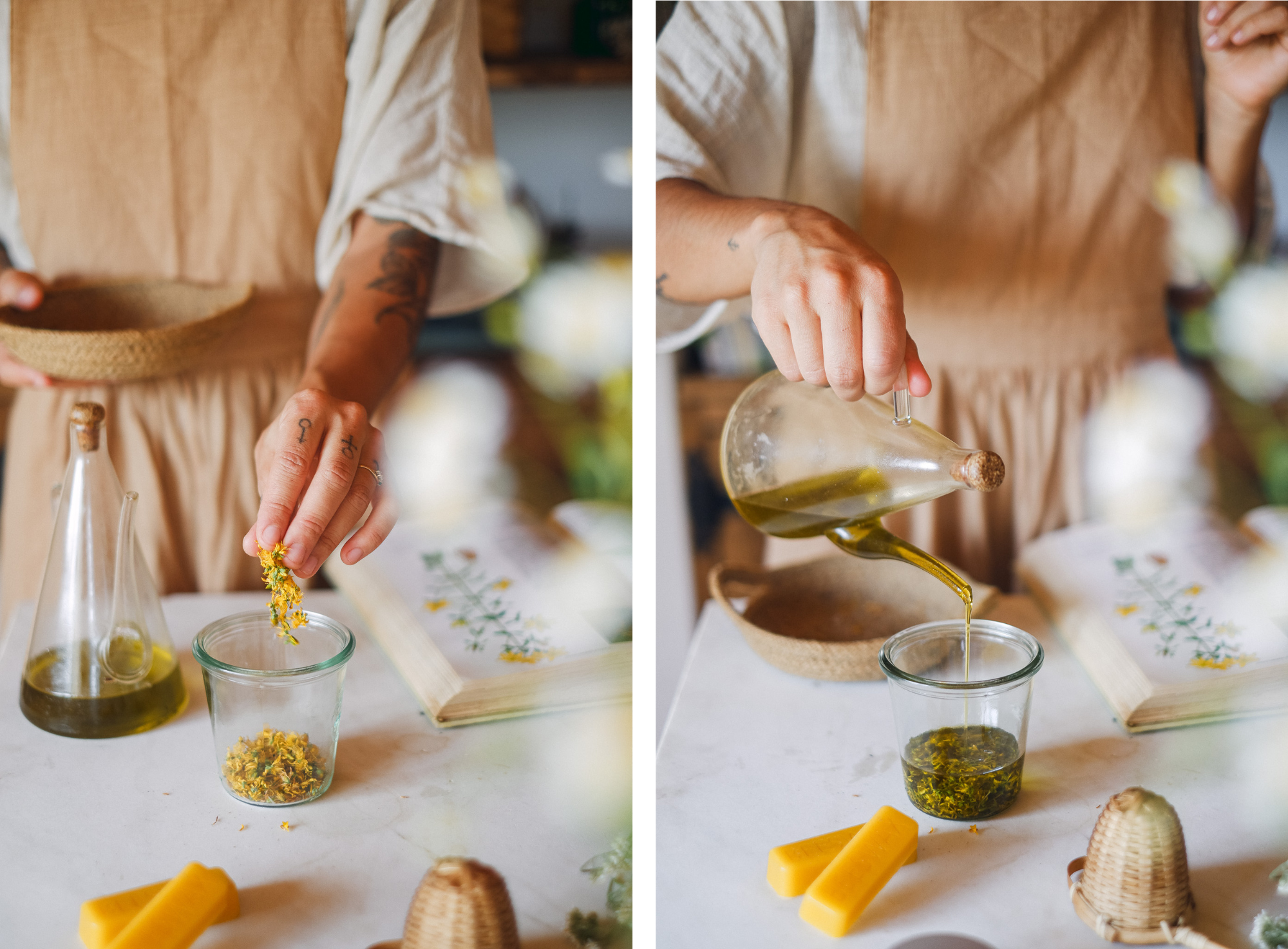
St. John’s wort-infused oil
This recipe doesn’t follow any specific measurements, as you are welcome to use whatever quantity of flowers you’ve ethically and sustainably wildcrafted. After you’ve harvested your flowers, allow them to wilt overnight before infusing them in oil. This will greatly reduce the water content that will lead to oil spoilage, while maintaining the active constituents you want to extract.
ingredientsfreshly wilted St. John’s wort (Hypericum perforatum) flowers and flower buds
organic carrier oil of choice, such as olive oil, sweet almond oil, or sunflower oil
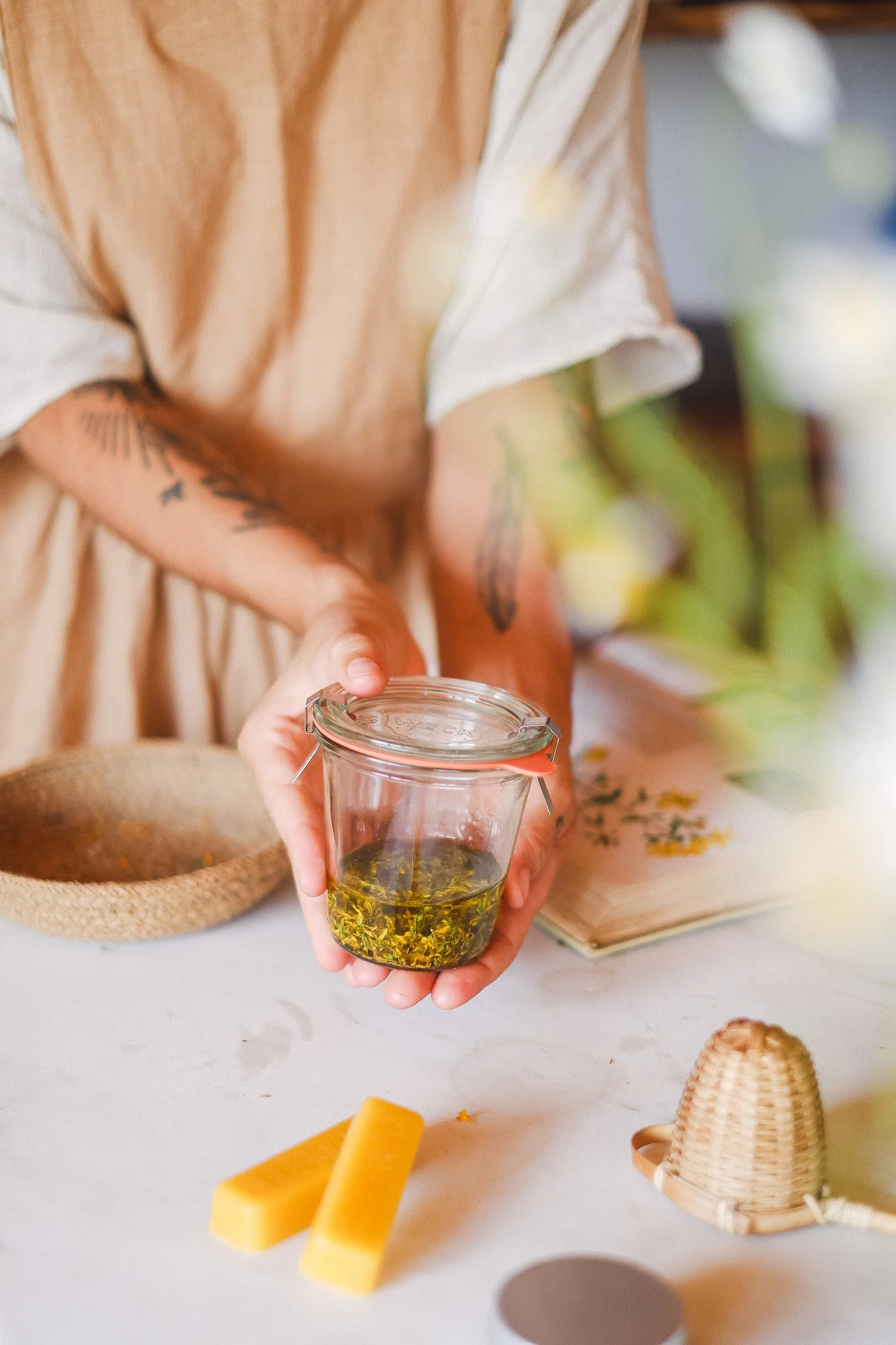
directionsSpoon the herbs into a clean, dry mason jar and pour the oil over them. Cover tightly with a lid and shake to combine. The herbs should be completely submerged. Add more oil if needed.
Set in a warm windowsill, where it doesn’t receive full bright sun, and allow the herbs to infuse into the oil for 4 to 6 weeks, shaking the jar every few days. See it turn bright red!
Line a strainer with cheesecloth and place over a bowl. Strain the infused oil, then gather up the edges of the cheesecloth and squeeze out as much oil as possible. Compost the herbs. Transfer the strained oil into a clean, dry jar with a tight-fitting lid.
Infused oil will keep for up to 1 year in a cool, dark place.
St. John’s wort salve
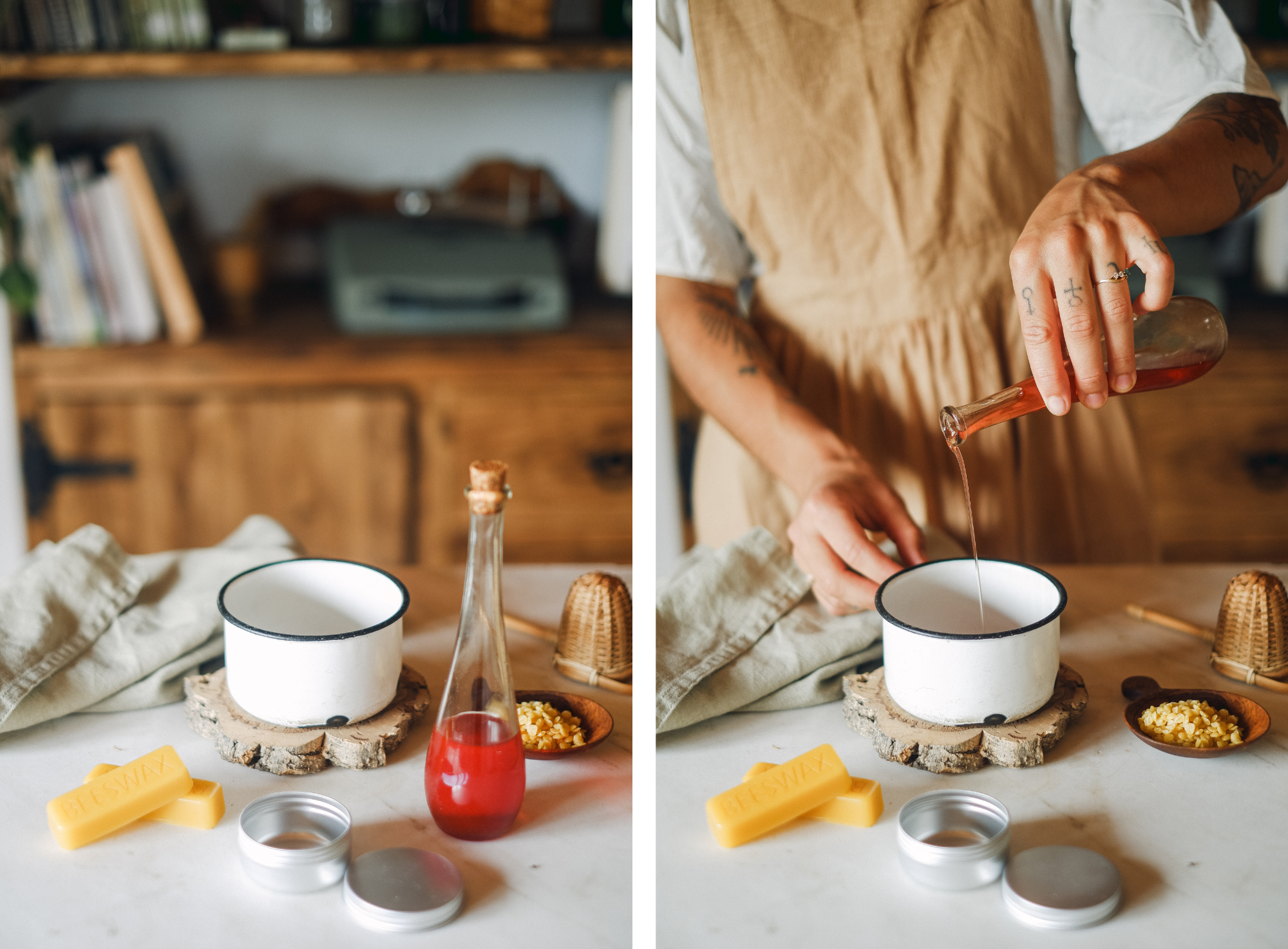
This salve recipe doesn’t follow specific quantities; instead, it is made by volume in parts, so you can adapt to whichever quantity of oil you have.
ingredientsSt. John’s wort-infused oil
beeswax, grated or in pearls, or a vegan alternative (one part beeswax to four parts herb-infused oil; for example, 1 cup of herb-infused oil requires 1/4 cup of beeswax)
directionsPut the St. John’s wort-infused oil into a double boiler (this can be as simple as a small saucepan that fits over a larger one with a little water at the bottom) and bring the water in the boiler to a gentle simmer to warm the oil.
Add the beeswax (or alternative), stirring until it has completely melted.
Carefully pour the hot salve into tins or jars.
Let cool completely before putting on the lids. Label and include the date.
Store in a cool, dark place, where it will keep for about a year.
Note: Due to its potential photosensitivity, avoid exposing skin where you’ve applied this salve to the sun after using.

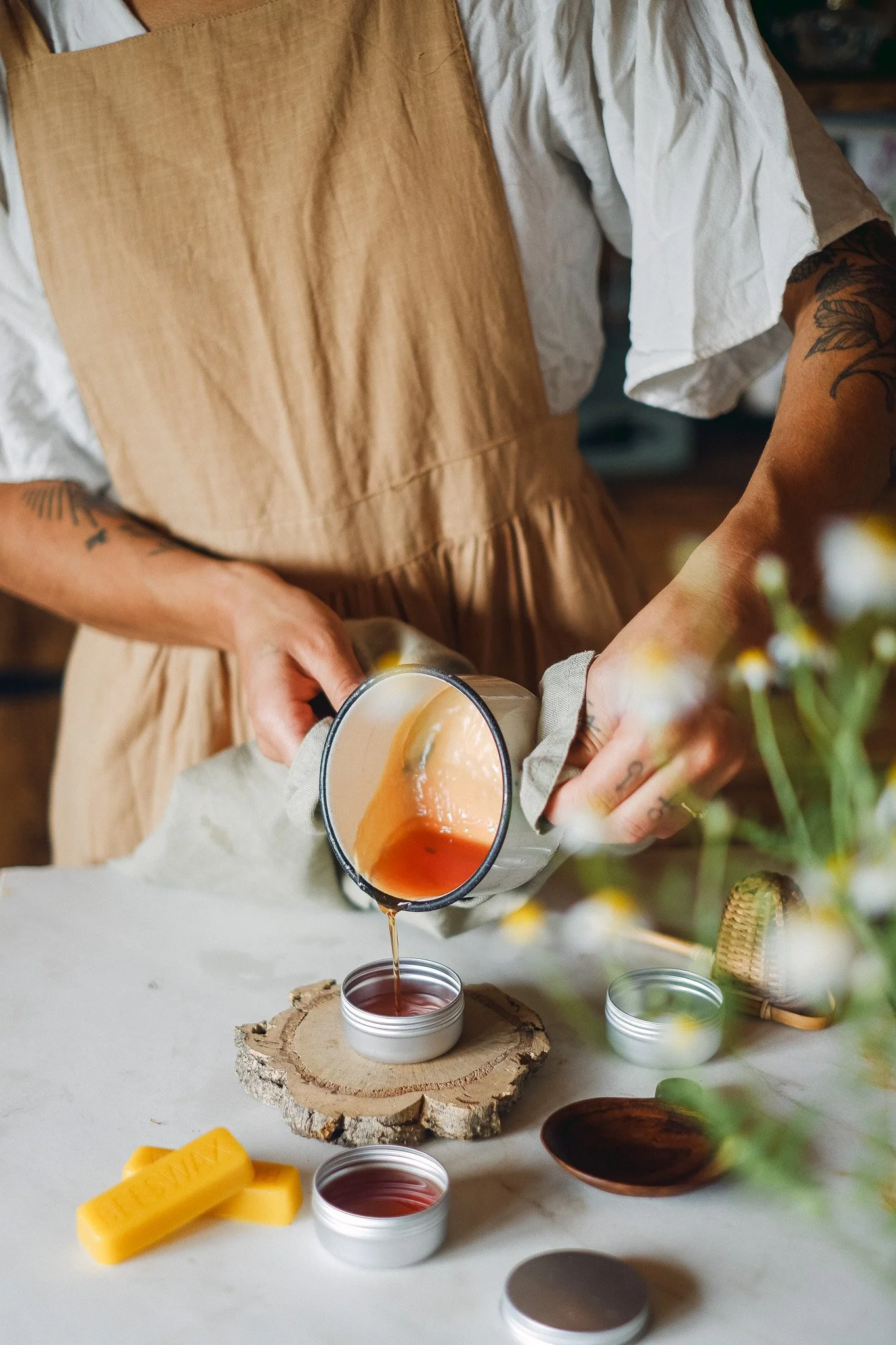
And just like that, you’ve made St John’s wort salve!
If you’re new to herbalism and want to make the most of this summer and get hands-on with herbs, I can’t recommend Herbal Academy’s Introductory Herbal Course enough. I know I keep repeating myself, but it really is the best place to start for beginners!
I’m off to a little neighborhood solstice celebration now, and I hope that your sunny days ahead are filled with joy, celebration, and creativity. As they should.
Until next time,
Cat 🌞