living without a fridge
It’s been 10 years since I last had a fridge or a freezer — which also celebrates 10 years of living on the Land. It also means a decade of puzzled looks and gobsmacked faces whenever the no fridge fact came up in conversations with strangers. How do you do it? But why?
First and foremost, let me assure you, dear reader. None of it was intentional. In fact, there have been few things I (we!) craved more than a fridge. The reason for the absence of the magical box of winter is less poetic than some may expect: we live off-grid, and the electric solar system we’ve had for the last decade is not powerful enough to support such a consuming electrical appliance. It’s not that fridges are especially high-consuming… it’s more that upgrading our solar system to something with higher capacity was an investment we simply couldn’t afford.
We’ve never had more than three plugs in our house during this decade. Two lights, sometimes three at moments. The only kitchen appliance, a hand blender. And yet, this has served us just right. But if you’ve been with me for a while, you may remember we started in my grandparents’ village in their old goat shed and built most things by hand from there, to where we are now. Things take time, and that’s a pace we are at peace with because it’s our own, handmade and handbuilt, organic pace.
So, after years of requests to write a post about living without a fridge, it feels fitting to finally write one today, the same month we finally got one. Oh, and plugs and lights throughout the house, too, as we finally upgraded our electric solar system.

Now, before I go on, here’s why I hadn’t sat down to write this post yet. Because deep down, fridges are luxury items. Because a large part of the world’s population, especially in the Global South, doesn’t have one. Because nothing is more click-baity than calling attention to something you’re doing like you’re the only one doing it and it’s breaking news. My grandparents, for example, didn’t have a fridge. In fact, the remote village where they lived (the one we used to live in all those years ago) didn’t have electricity until 1981. Y’all, electricity is rather new in my family history. My dad grew up reading by candlelight. And maybe is the same for many of your families, too?
So well, now that we have a cute ass black fridge with a freezer on top, I’m at ease about writing the requested piece. I’m still learning how to work with it, so I won’t tell you what I know about having it. Rather, here’s what I know about not having it.

Houses built in traditional ways have naturally cool spaces for storage
My grandparents had a type of cellar in their stone house that is called loja in portuguese. It is barely below ground level, with thick stone walls that never saw the sun, and no windows. It’s always cool and is ideal for storing wine, cured meats, cheeses, and anything else they produced. Traditional houses, built over the ancestral knowledge of what the weather is like in each bioregion, from local materials, hold answers. What are some of the traditional cooling spaces and methods of the place you inhabit?
fridges are a seasonal need
At least in my climate, where summers can reach 44ºC (111ºF), but winters are quite mild. We’ve never had food spoil in winter. But we also adapt what we eat for each season. Butter, for example, is not (was not) a summer food for us, because it melts and goes rancid in a matter of days. There were things we just didn’t get in summer, but then splurged on during the colder months
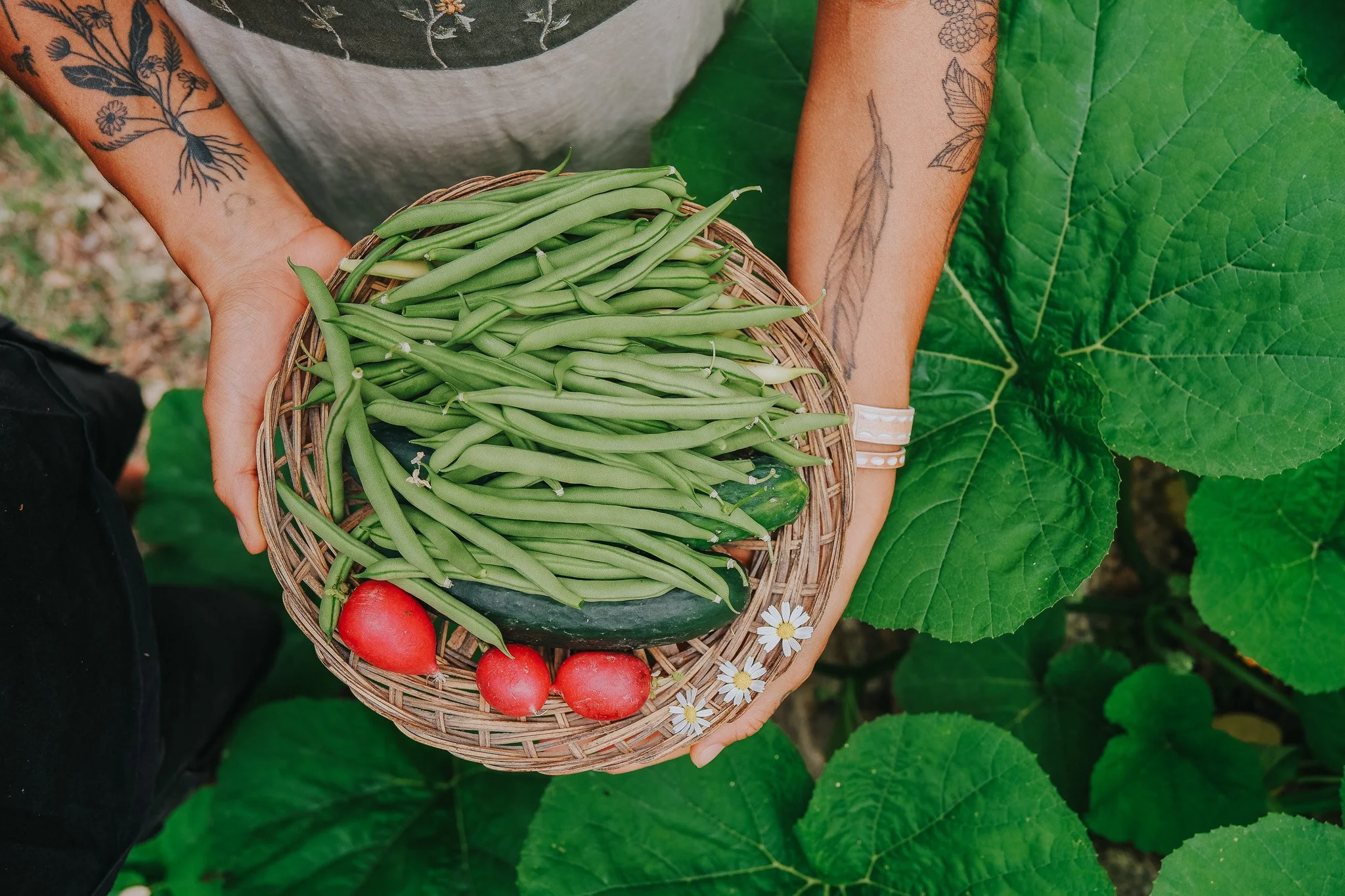
the garden is the best storage place for garden produce
There are many garden crops better left in the ground and harvested only when needed, than brought inside only to see them sadly wither. Of course, that isn’t the case for vegetables that will become too bitter, too hard, or rot if not harvested in the right window. But this is something I’ve learned — many vegetables will be happy with being left on the ground and harvested on the day they’ll be eaten.
many products will last for longer at room temperature than we give them credit for
My mom lived through a civil war and scarcity, so I learned this one from her. Always trust your senses when assessing the quality of food, and you’ll become attuned to it. Like my partner said, we overestimate how many things actually need to go in the fridge.
during the warmer months, cook smaller meals
In summer, a cooked meal won’t make it from one day to the next (or not even from lunch to dinner), so cook only what you need for a meal. I know, I know, leftovers are an outstanding resource to have handy but, over the last decade, leftovers have counted as seasonal food for us.

learn traditional food preservation methods
Fermentation, salting, sugaring, drying, curing, and, more recently in history, canning. There are so many ways of making food last longer that our ancestors have relied upon over generations. Personally, I love looking at my pantry shelves and seeing them fill up with colorful jars of grown and foraged produce during summer, and wean during winter, only to start waxing again as the days grow longer.
cook perishable food on the day you get it
This is, of course, a no-brainer. But worth mentioning because it is something that has shaped our meal planning over the years. We still got perishable foods at times: often, we’d make a lovely meal from locally raised meat, for example, on the day we got it from our neighbors, but have different food the other days. Special foods create special events!
community is food, food is community
Share what you have too much of. Your heavy harvests, your large meals. Food is one of the simplest and most radical ways of nurturing a community.
You know what, I can’t think of anything else. Maybe that’s it. I mean, there’s no secret. After all, people have been doing it since the dawn of human history.
Am I giddy about finally having a fridge and freezer? Heck yes. Ice. Homemade ice cream from my neighbor’s strawberries. A cold glass of kombucha. Little boxes of leftovers. My sourdough starter can sleep for longer without being fed. It’s a luxury! I want to sleep in front of my cute ass black fridge. I want to write odes and poems about it. And I value it so, so much — like many other things it took us time to get (an indoor shower, hot water, plumbing). Nope, still not getting rid of our dry compost toilet. It’s quite okay to accept that building things by hand, with no savings to start from, will take time, but that makes every small accomplishment the more special.

Fridge-free, fridge-haver? What’s your experience like? Tell me what you know about living without this appliance. And if you have one, please feel free to share your favorite fridge foods with me and everyone else below — you know, those dishes that need setting in the fridge, and all those cool recipes for summer months… It’s a new chapter and I’m here for it!
Wishing you a blessed, enchanted summer, friends! 🌞